
Wine bottle cap liners are primarily used to ensure the bottle's airtightness and prevent oxygen ingress, thus protecting the wine's quality. A wide variety of types are available on the market, covering mainstream materials such as Saranex, Sarantin, PE (polyethylene), and EVE. In choosing a wine bottle cap liner, Saranex is suitable for wines intended for short-term consumption, allowing moderate oxygen permeability to promote maturation; Sarantin (Saran/tin) is suitable for wines intended for long-term storage, maintaining quality stability with zero oxygen permeability.
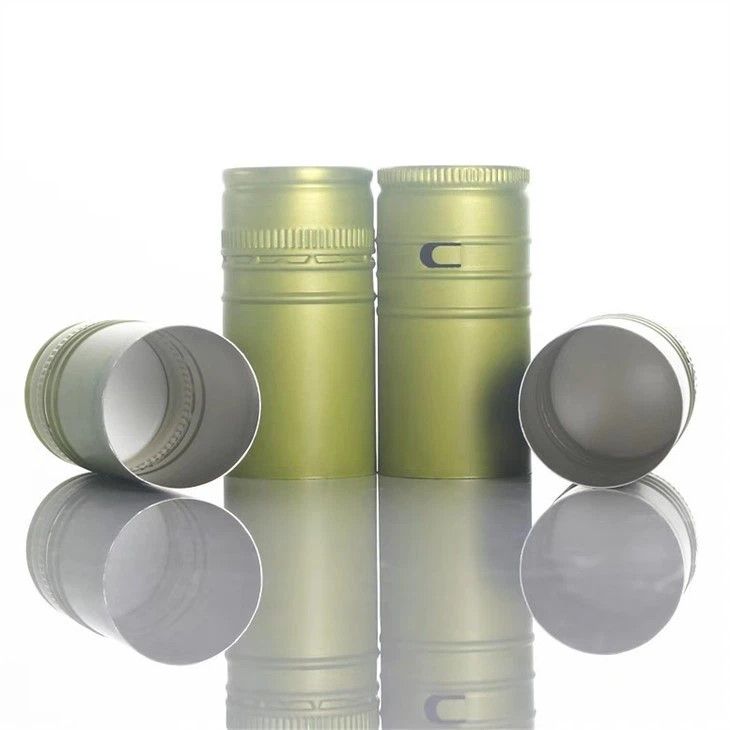
Core functions of the liners for wine bottle caps:
- Sealing guarantee:
The liner, made of elastic material, fills the tiny gap between the aluminum bottle cap and the bottle neck, forming an airtight barrier to prevent the ingress of air, moisture, and odors, thus avoiding oxidation or spoilage of the wine.
- Chemical stability:
It must be resistant to acidic substances in wine (such as tartaric acid and acetic acid) and alcohol, ensuring that no harmful substances are released under prolonged contact, maintaining the purity of the wine.
- Optimized fit:
For different bottle neck sizes and shapes, the gasket achieves a tight fit through elastic deformation, compensating for processing errors and improving sealing consistency.
Saranex liner: Ideal for short term wine consumption
Saranex consists of two layers of PVDC (polyvinylidene chloride) and Saranex polymer, exhibiting low oxygen permeability (approximately 0.3 ppm/year), while allowing trace amounts of oxygen to enter the bottle. This design balances airtightness with micro-permeability, making it suitable for wines that require moderate "breathing" to promote maturation.
- Suitable scenarios
Short-term consumption (<10 years): Saranex's oxygen permeability prevents the wine from developing reductive flavors (such as rotten egg flavors) due to complete oxygen isolation, while also preventing excessive oxidation that leads to the loss of fruit aromas.
Red wine aging: Some producers choose Saranex liners, allowing for slow oxygen exchange during bottle storage, helping to soften tannins and enhance complexity.
- Market applications
European wine producers tend to use Saranex because it mimics the micro-permeability of natural cork while avoiding cork taint (TCA/TBA) and unstable seals.
Sarantin (Saran/tin) liners: The preferred choice for long term wine storage
Sarantin is a composite material consisting of a PVDC coating and a tin or aluminum layer, exhibiting zero oxygen permeability (nearly 0% oxygen transmission), completely isolating the wine from external air. This structure ensures that the wine is not affected by oxidation during long-term storage, maintaining its freshness and fruit aromas.
- Suitable scenarios:
Long-term storage (>10 years): Sarantin's airtight seal prevents wine from spoiling due to oxidation, making it especially suitable for high-end wines requiring long aging.
White and sparkling wines: These wines are more sensitive to oxidation, and Sarantin's zero oxygen permeability effectively protects their delicate flavors.
- Market applications:
Australian and New Zealand wine producers widely use Sarantin gaskets because they provide the most stable seal, reducing fluctuations in wine quality. For example, Penfolds Winery's 1996 vintage, bottled with Sarantin, received high praise from wine experts.
Different types of wine bottle caps liners materials offer different sealing properties and oxygen barrier capabilities. Choosing the right aluminum bottle cap liner can significantly affect the flavor and aging potential of wine, so wineries will select appropriate liner materials based on different needs and wine characteristics.
MESSAGE
RECOMMENDED PRODUCTS
-
 Aluminum Foil Wine Bottle CapsAluminum foil wine bottle cap (also known as bottle seal or top) is an aluminum closure material that covers the outer layer of a cork or screw cap.More
 -
Spirit Bottle CapsThe spirit bottle cap is used to the vodka, whisky, tequila and other liquor glass bottles, the color and the printing can be customized.More
-
Whiskey Bottle CapsWhisky bottle cap is a packaging material used to close the whisky bottle, mainly made of aluminum alloy.More
-
Alcohol Bottle CapsAlcohol Bottle Caps are bottle top encapsulation components used to seal alcoholic beverages such as spirits, wine, beer, premixed drinks, etc.More
-
Liquor Bottle CapsLiquor bottle caps refers to the caps used to seal spirits (such as whisky, vodka, rum, white wine, etc.).More
-
Sparkling Wine CapAluminum sparkling wine caps are mainly used in the production phase of sparkling wines (e.g. Champagne, Prosecco, Cava, etc.).More
PRODUCTS
CONTACT US
Add:Zhengzhou, Henan, China